Pages

Wednesday, January 18, 2017

Clothing Must-Haves for Stormy Games

Recently it has been raining a TON where I live, and that means two things - first of all, everyone get's super hopeful that school will be cancelled, and second, it means CRAZY soccer practices/games. Without the right gear, these times on the pitch can be pretty painful. However, over the years I have learned the correct things to bring for both rainy and freezing games, so here are a few tips to get you through these games enjoying yourself.


Probably the most basic thing to wear to in one of these situations is Under Armour. This is basically a tight-fitting shirt that goes under one's jersey. The most common colors are white and black, and they are really a soccer players go-to for cold and wet games. Don't think that you can get off with a normal, cotton long-sleeved shirt, because those will soak up rain/sweat and weigh you down. Unfortunately Under Armour does not totally repel the water, and it can weigh you down, but definitely not as much as cotton. I have yet to find a completely repellent undershirt, but for now Under Armour works well.


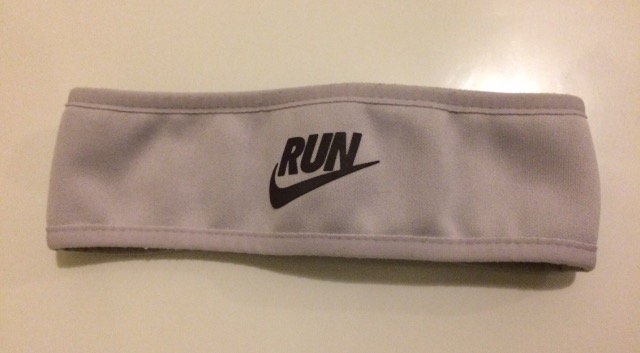
My second go-to, for games that require more warmth than just Under Armour, I use a thick, ear-covering headband. This is worn along the hairline, not touching the ponytail. I prefer this to a normal beanie, as beanies tend to fall off in games or can be difficult to wear with a ponytail. I find that it provides the same amount of warmth, and fits very nicely. The headband I use is from Nike, but they can be found at stores such as Walmart too.


A very helpful article of clothing that I do not take advantage of enough, is gloves. The hands tend to get very cold during games, and having gloves can be very comfortable. In addition, I recommend putting hand warmers inside the gloves to create more warmth.


Under Armour leggings are for VERY extreme conditions, and I rarely have the need for them. But for those playing in the snow or in freezing temperatures, these are great. Players are not allowed to wear sweats during a game, so these can be worn under the shorts and socks for the same effect.


While sweats and jackets cannot actually be worn during a game, I strongly recommend wearing them during warm-up and whenever on the bench.

Those are my must-haves for all rainy and freezing games, and hopeful they help you out with your next game! If you have your own ideas, feel free to comment them below!


Saturday, December 10, 2016

The Sport of Patience and Perseverance


          Everyone has heard the saying from Malcolm Gladwell about becoming a phenom in any subject requires 10,000 hours of practice. However, truly mastering soccer probably takes about twice that, considering there are so many different aspects involved. Think about all the different things you would have to master - fitness, speed, strength, mental strength, dribbling, passing, shooting, curving the ball, moves, footwork, etc. Basically if you want to master the game of soccer you have to be super motivated for a very long stretch of time.
          Needless to say, soccer requires tons of practice an effort. Players gain an enormous advantage if they can start young. The adolescent brain is very shapeable at a young age, and teaching a player young can allow it to stick in the brain as they grow up. A coach of mine always said that teaching a child is way easier than teaching an adult, because kids are simply ready to learn.

Image result for persevering soccer player
          Throughout one's soccer career there will generally be many bumps in the road, with poor coaches, off games, injuries, etc. That is why soccer is a game demonstrating immense perseverance. If you can suffer through an injury, or sit on the bench for a season, and come back stronger than ever, then you are what the game is all about. You might have to put in extra time, grit your teeth, and shed a few tears, but that motivation is what creates a master of soccer. No one has 10,000 hours to spend on every part of the game, but there are those who have that determination to fight for the game they love and work harder than the rest. This is what creates extraordinary soccer players.
          Sure you might hate that some unskilled player is getting more playing time than you, or that your coach does not respect your way of play, or you cannot seem to win a game - but the reality is, these things happen, and these things will pass. There are good points and bad, and you have to embrace both. These bumps in the road should encourage you to fight harder and dig a little deeper.
          Today my message to all the struggling soccer players, or to those who want to take it to the next level - remember that it will not always be perfect. Be patient and push as hard as you can, and I promise you will reach your goals.
Image result for persevering soccer player

"Soccer Quotes for Motivation." Great Minds Think Fit. N.p., n.d. Web. 10 Dec. 2016.

Wednesday, December 7, 2016

The Best of the Best in Fùtbol


          Once again the Barclays Premier League stats this season has thrown the world for a curve. One of the fascinating parts of soccer is how quickly teams and players can raise to the top or fall. Rookies are constantly gaining fame, and the favorites fall into ditches. As mentioned in a previous blog, Chelsea had a very difficult past season as Leicester rose to the top. However, this season shows the reverse once again, for the stats show Chelsea returning to their former glory. In this blog we will just go over some of the dangerous players paving the way to success in the league so far.


          The number one goal scorer in the league shows a great representation of how league has been playing out so far. Diego Costa is from Chelsea and has experienced the same road in the past few years as the club. Just two years ago Costa came out of the season with 24 goals, a high amount for the premier league. Last year he fell down to 12 goals. Now he seems to be returning to his old self with 11 goals only half way into the season. With 15 weeks left of play we can assume his count will rise much further.
          Kevin de Bruyne is another interesting story, as he transferred two years ago from Chelsea. Evidently this was a strong move for him given that his goals scored increased from 0 to 7 after the transferring year. In terms of teams, de Bruyne represents a solid team whom have generally found themselves in the top of the league.

         
          The next player acknowledged for his major contributions is Jordan Henderson, who could be overlooked since the most passes is not as exciting as the most goals or assists. However, any true soccer player knows how important it is to have a strong distributor. Again it is not surprising that he comes from Manchester United, a very solid team that tends to knock the ball around a lot.
           The final player that needs to be watched out for is Tom Heaton, from Burnley, who has been the keeper to beat this year. You will notice lower down the line we see some of our usuals such as Petr Cech, but a major absence is David de Gea. He has been often hailed as one of the best keepers in the world, but evidently he is in a slump this year not making the top ten. Whether he makes the leaderboard by the end of the season will be another story.
          To learn more about stats in the Barclays Premier League, check out their website here.


 "Premier League Club Statistics, Team & Player Stats." Barclays Premier League. N.p., n.d. Web. 08 Dec. 2016.

Thursday, December 1, 2016

Pre-Game Warm-ups: Are Your Players Exhausting Early?

Hi everyone! Sorry for the long break but now blogging season has begun!

If you have ever played soccer at above recreational level, you know a pre-game warm-up is crucial to play at your best. However, this aspect can be overlooked and might just be the reason many teams lose early on.


Everyone who has played soccer before knows what it is like to be scored on within the first few minutes. The players all sigh, thinking it's going to be that type of game. Usually one or two players say something like "We can get it back", or "Don't worry about it, there wasn't anything we could do about that one."
The reality is, an early goal tends to get the general mentality down which can turn into a downward spiral if a few more unfortunate incidents occur. It all stems from the beginning...how the course of the game will go. And there is something even before that...what happens before the game determines what will occur in those 90 minutes. It's all in the pre-game warm-up. So I suppose there often is something we can do about stopping those early goals.

Generally before game warm-ups are an hour long, and it starts with the coach's message. This is extremely important, as strategies are discussed and the goals for the game begin to set in. For youth particularly, the coach must be very particular about what they say in order to reach out to each player as an individual. A negative tone will stick with the players, and with the team as a whole, for the entire game. Do not sugar-coat the situation if a brutal or competitive game is in store; let the players know that they are up for a challenge. However, ensure that you show belief in the team's capabilities and give them tips for how they can be successful. It helps if you give the lineup at this time so no surprises happen minutes before the game, and players can begin picturing themselves on the pitch.


Next comes the dynamic warm-up/stretching, which is where mistakes tend to be made. Personally I had a few coaches who would make all of us run a ton at this part, and we were all left exhausted for the game. Let the players dictate what they need in order to feel loose. Younger players tend to need less time for this portion because they do not need to stretch as much. Older players value this time a lot because they need to loosen up and stretch sore muscles. Particularly in times when several games are being played consecutively or within a few days, this part is important. Just remember that it is more about stretching than running.

Following the dynamic stretching is the static stretching, where again younger players should not be given too much time. In reality, younger players (under age 10) should only have 45 minute warm-ups to avoid wearing them out. Sometimes teams (youth teams mostly) can get off track here and stray from thinking about the game. A rectifying strategy is to have the team circle up whiles stretching and go around giving tips and reminders for the game.

The first actual drill typically is a basic passing drill. Nothing too complicated, and nothing new for the players. Just do a simple, familiar drill to get players into their groove and used to the field. On example is groups of passing lines, where players start out with two-touch passes, move into combination passes (give-and-gos), and finish with straight one touch passes. Other examples include "the wine glass" which is a drill set-up in the shape of a wine glass with a triangle set of cone with one more about 15 yards away. The player in the faraway cone passes to the nearest point of the triangle who turns and plays to a side, with the sides rotating each time. 


After the passing players should have gotten their touch, and can now move into possession. This is the most game realistic part of the warm-up, so how the team performs here is a good indicator of what is to come. As the coach, keep up the energy with encouragements. Any criticism should be avoided, unless it is something players can fix before game time. Instruct the captains beforehand to be ramping up the energy throughout the warm-up. During the game of possession constantly remind players to communicate, as it is essential that it occurs in the game. Getting players talking beforehand will ensure it happens on the field. Play possession generally until the team starts knocking the ball around swiftly and to the team's ability. If this is not happening, move-on, since playing too long will drain them.


Next comes shooting, where players can perfect their touch and get start getting their shots on goal. Also, it allows the goalie to have actual shots taken against them. Again, simple is good here so you might just have players by the goal posts passing out balls to shooters. Or, you can put together a crossing - finishing drill. Whichever way you decide to go about this, make sure players are getting their shots in without exhausting themselves.


And just like that it is gametime. Make a few last encouraging remarks and the players will start their cheer. Beforehand, encourage them to create an actual cheer that will unify them as a team before the game. Or, have everyone gather and say something inspirational or of meaning to the team before they go out and play. This last moment of being all together is important to keep the chemistry up during the game. After that everything is just in the moment. You have done everything you could to help the outcome; the are energized, unified and driven. And now it is time for the team to shine.



Thursday, April 7, 2016

Spring Training

We are officially a few weeks into spring, which means spring season has started for many people including myself. When I think spring in terms of soccer, I think of lots of training and game play, focused on development come fall. That's why today I am going to discuss different ways to develop as an individual. As mentioned in a few posts previously, a team is only as strong as its players and cohesion, so personal improvement for every teammate can help build a team.
I have constantly been told that practicing on my own, outside of normal training, is the key to success in soccer. This was not super exciting to me when I was younger because all I really did on my own was juggling. So, I am going to share some individual practices you can do to help your personal development. I would suggest working to improve these areas specifically this spring:
1. Speed
2.Endurance
3.Touch
4. Power
Certainly there are other necessary skills in soccer, such as strength and vision, but these are those that I will focus on today, and in my spring training. Starting with speed and endurance...soccer is made up with tons of quick little sprints to the ball, in which speed is a huge advantage. To manage an entire 90 minutes of these sprints, one must have a strong endurance as well. So how do we improve on these two things? One exercise to develop speed, as well as good footwork, is using a speed latter. 
A speed latter is a great way to increase agility, propelling oneself quickly in and out of the boxes. It keeps you light on your feet and aware of where you are placing your feet, while forcing you to move fast. For those of you who do not own a speed latter, chalk drawings can substitute.
While a speed latter is great to advance your agility, it does not increase your endurance unless you keep up with it for a very long time. This is where I suggest interval training, which will help establish a greater endurance, and the speed at which you can go for an allotted time. A great interval training would consist of running hard for 0.5 mi, then resting at a slow jog for 0.25 mi. This process repeats, and leaves you a lot more exhausted than you would think. The total amount of miles you run, whether it be two of six, depends on how developed your endurance already is. If needed you can begin with the opposite distances until you get the hang of it.
Next is touch...all aspiring soccer players need to have excellent touch and for the ball to basically move at a single thought. Though I mentioned before that juggling may not be super entertaining, it is a great way to improve your touch. If you have a juggling record in the hundreds and the standard juggling does not seem to help you much, try moving to a smaller soccer ball, which takes more work to control.
Another way to drastically improve your touch is to simply keep a soccer ball with you around the house. We have tons of soccer balls littering our floors, so wherever I go there is a soccer ball at my feet. I get into the habit of doing little cuts around the furniture and juggling without noticing when I am bored. We pass the soccer balls against the couches and play pass-back under the table. This, though not seeming like work, it makes the ball seem very natural at your feet and makes you comfortable with the ball on the field.
Last but not least, I recommend working on your power this spring. Having a strong drive and powerful shot from outside of the 18 is invaluable. We have a net at my house called an "UltimaGoal" which is great for working on your power shot, but if you do not have one, I simply recommend going to a field nearby and shooting, or taking corners, whether or not you have others with you to return them. Practice good form and strong contact.
 Obviously there are many other things you could do to improve your individual skills, but these are just a few that hopefully you will keep in mind this spring. 

Monday, February 29, 2016

Rising to the Top with Jamie Vardy

Image result for jamie vardy

https://encrypted-tbn2.gstatic.com/images?q=tbn:ANd9GcSzEcORckU
QSNquqnMYmw9KV2UOKirp1rQbPjXcLczOQBc-Wb1C


     If you thought Leicester was unknown a few years ago, take a look at Jamie Vardy.
Vardy is a striker for Leicester City and the England National Team, who has been all the rage recently, with 19 goals and 4 assists in his previous games ("Jamie Vardy").  Many Barclay's Premier League Fans are asking themselves where this stud came from, who just begin to show his true colors recently.
     Before becoming Leicester's well-known hero, Vardy played several seasons in low division
leagues, such as: Stocksbridge Park Steels, Northern Premier League, and Conference Premier League. He was a very prominent player on all these teams, winning "Player of the Year" on one occasion.
     Initially, joining Leicester was difficult for Vardy, who was added in 2012. Usually being the top player on every team, Vardy was not used to being a substitute and having little effect on the outcomes of games. But he certainly did not give up on becoming the best. Out of nowhere Jamie Vardy began to turn it on. Since that moment, he has been on fire. Vardy and fellow teammate Riyad Mahrez have been blowing away the entire world with their goals performed as a duo.

Image result for vardy and mahrez
https://encrypted-tbn3.gstatic.com/images?q=tbn:ANd9GcRftfxx44rq6TP8aClqo
IvX9XF6x-1tmip6BPdXDwlSiJ3AzmOOsQ

     Vardy has been particularly well known for his precise dribbling and "flick-ons". Fútbol fans over the world  are astonished that this player may be Leicester's first chance in ages to clinch the Premier League Championship.
    Already Jamie Vardy has set the world record for continuous goals in consecutive games. This player who was unheard of a few years ago, is dominating the pitch and the world is eager to witness where he will go next.

Jamie Vardy with incredible goal vs Liverpool
https://youtu.be/Lnncn1Hd3g8


Monday, February 1, 2016

Knowledge of the Game: An Overlooked Aspect

     Soccer is a sport in which intelligence and physicality are both necessities, and when mixed create very talented players. In "Qualities of a Soccer Player", FC Alliance describes the mental and physical aspects which great players display, and what new players should practice.  Today I am going to focus on a few of the knowledge related skills that are sometimes overlooked compared to those concerning fitness. Here are a few mental attributes, as described by FC Alliance, that I think are very important in a strong soccer players.

  1. Positional Play
  2. Vision
  3. Awareness
  4. Instinctive Reaction
  5. Adaptability 
  6. Inventiveness
http://caribbeancr.edublogs.org/files/2014/08/n_f_c_barcelona_xavi_hernandez-4954736-1mvcrp0.jpg


     I would say "positional play", "vision", and "awareness" are all connected and these all come with experience on the field. When you are on the field more and more, you become more aware of the area around you and can see the game better. Strong players know where their teammates and they should be, depending on the position of the ball. They know how to "use the space" and "create space", which helps create plays and advance the game of play. Furthermore, these players can anticipate where the ball will be played and visualize plays depending on where their teammates and defenders are, where the ball is, and where the space is. These qualities are extremely valuable, and they all come from extensive time spent simply playing.

      Then comes "instinctive reaction" and "adaptability" which refers knowing what to do when you receive the ball, even when there is pressure on you. When the ball is played to you, the last thing you want is to freak out when an opposing player pressures you and lose possession for your team. Therefore, strong players are able to remain composed and can adapt to tough circumstances. There players can seamlessly move forward when the pressure is on and thus make a big difference in the game.

     Finally there is "inventiveness" which is what creates a skillful midfielder or forward. These players, also with lots of experience, can create plays and goal scoring opportunities, with moves, tricks, and unique plays. This is where a player's personality can really show and aid their team.

http://i.dailymail.co.uk/i/pix/2014/01/26/article-2546200-1AE8AA4F00000578-15_634x512.jpg